If you're producing a shoot with a crew, a call sheet is non-negotiable. Here's what it is, what goes in it, and how to build one that actually works on the day.
A call sheet is the document that tells your crew everything they need to know about a shoot day before they arrive. Where to be. When to be there. What they're shooting. Who's in it. What equipment is needed. What the weather is doing. What time the sun rises and sets.
It sounds like admin. It's actually one of the most important communication documents in a production.
When a crew member gets a call sheet the night before a shoot, they should be able to answer every practical question they have without needing to contact the producer or director. That's the goal. A good call sheet removes friction from the morning of a shoot and keeps the day running cleanly.
Here's what goes in a standard call sheet.
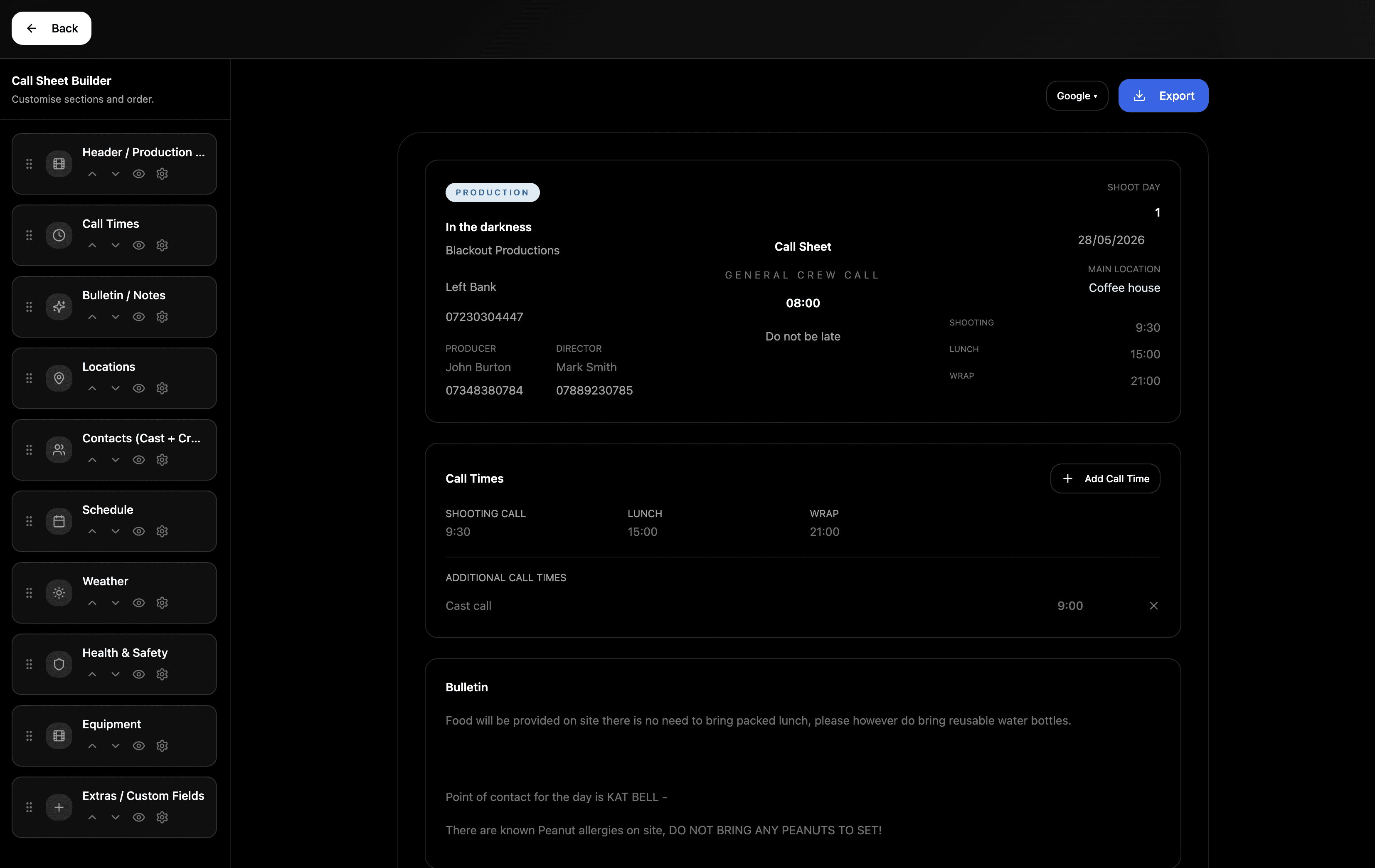
Production information. Project title, production company, shoot date, shoot day number out of total days.
General call time. The time the whole crew is expected on set or location. Individual call times for specific crew members can vary.
Location information. Full address, parking details, nearest hospital (always include this), and any access instructions.
Weather. Sunrise, sunset, temperature forecast. Essential for outdoor shoots.
Schedule for the day. Scene by scene breakdown of what's shooting, in what order, with estimated times.
Cast list. Who's called, when they're called, when they're in makeup/wardrobe, when they're on set.
Crew list. Names, roles, and contact numbers for every crew member.
Equipment list. What's on set and who's responsible for it.
Advanced schedule. A brief look ahead at what's shooting the following day so crew can prepare.
A call sheet isn't bureaucracy. It's the document that means your crew shows up informed, prepared, and ready. Without it, you're starting every shoot day playing catch-up.
Jonathan Germanos
Founder, Shotly
The best time to send a call sheet is the evening before the shoot, once the schedule is locked and you've confirmed the key details. Sending it too early and things change. Sending it too late and people don't have time to prepare.
Keep it to one page if you can. A call sheet that's four pages long is a call sheet nobody reads properly. The core information should be immediately visible.
And always double-check your location details and contact numbers before sending. A wrong address on a call sheet is the kind of mistake that costs you an hour of your shoot day.
Shotly generates call sheets automatically from your production data. Your schedule, cast, crew, locations, and equipment are already in the platform, so building a call sheet takes minutes rather than the hour it used to take in a spreadsheet. Start free at shotly.io.