A shot list is one of the most useful documents a filmmaker can build before a shoot. Here's exactly how to write one, what to include, and why it makes such a difference on the day.
A shot list is exactly what it sounds like: a list of every shot you plan to capture on a shoot day, in the order you plan to capture them. It sounds simple. In practice it's one of the most powerful planning tools a filmmaker has.
A good shot list means you arrive on set knowing precisely what you need. Every setup, every angle, every lens choice, every camera movement. Your crew knows what's coming next without asking. You move faster, you miss fewer shots, and you leave with the footage you actually need to cut a film together.
Here's what every shot list should include.
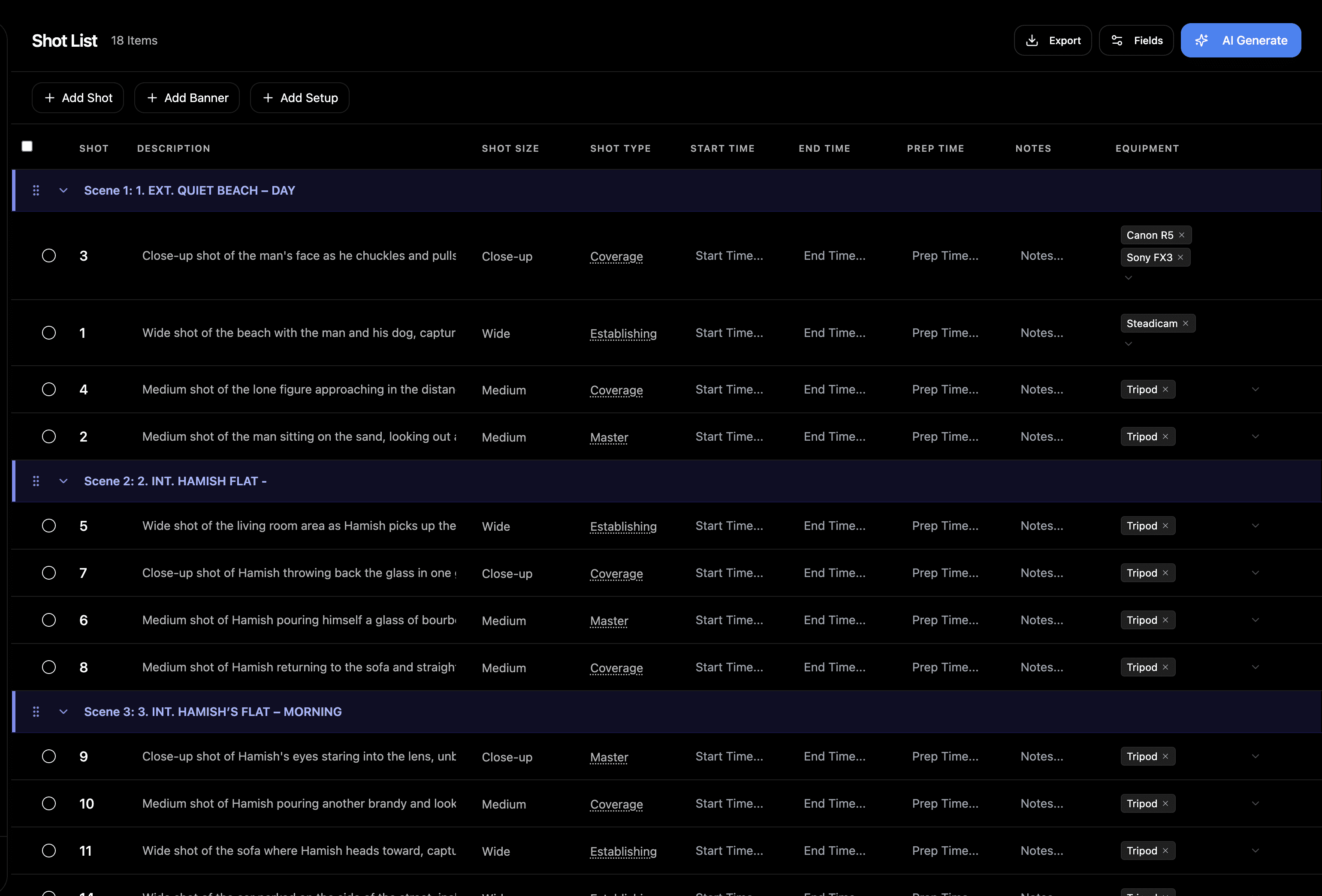
Scene number. Which scene does this shot belong to? Essential for anything with multiple locations or a non-linear shooting schedule.
Shot number. Number your shots sequentially. This makes communication on set fast and unambiguous. "Moving to shot 14" is clearer than "the wide of the kitchen."
Shot type. Wide, medium, close-up, extreme close-up, over the shoulder. Define what the frame contains.
Camera movement. Static, pan, tilt, dolly, handheld, crane. If the camera moves, note how.
Lens. If you're working with a specific focal length for a specific look, note it here.
Description. A brief note on what the shot captures and why it matters to the scene.
Notes. Lighting, audio, any specific technical requirements.
That's the core of a shot list. You can add columns for equipment, estimated duration, or director's notes depending on how detailed your production needs to be.
A shot list isn't about being rigid. It's about knowing what you need so you can adapt when things change on the day, and they always change.
Jonathan Germanos
Founder, Shotly
A few things worth knowing as you build your first shot list.
Shoot in order of setup, not in order of script. If you have three scenes in the same location with the same lighting setup, shoot all of them together regardless of where they fall in the story. Reorganising your shot list around the logistics of the day saves enormous amounts of time.
Don't overload it. A shot list that's three times longer than you can realistically shoot in a day isn't a plan, it's a wish list. Be honest about time. Factor in setup, travel between setups, unexpected delays, and the reality that everything takes longer than you think it will.
Prioritise. Know which shots are essential and which are nice to have. If the day runs short, you know exactly what to cut without losing the scene.
And build it early. The process of writing a shot list forces you to think through the scene visually before you're on set. Problems you'd discover at 8am on a shoot day, you discover at your desk the week before. That's always a better place to find them.
Shotly has a built-in Shot List tool that lets you build, organise, and share your shot list as part of your full pre-production workflow, alongside your schedule, call sheets, and breakdowns. Start free at shotly.io.