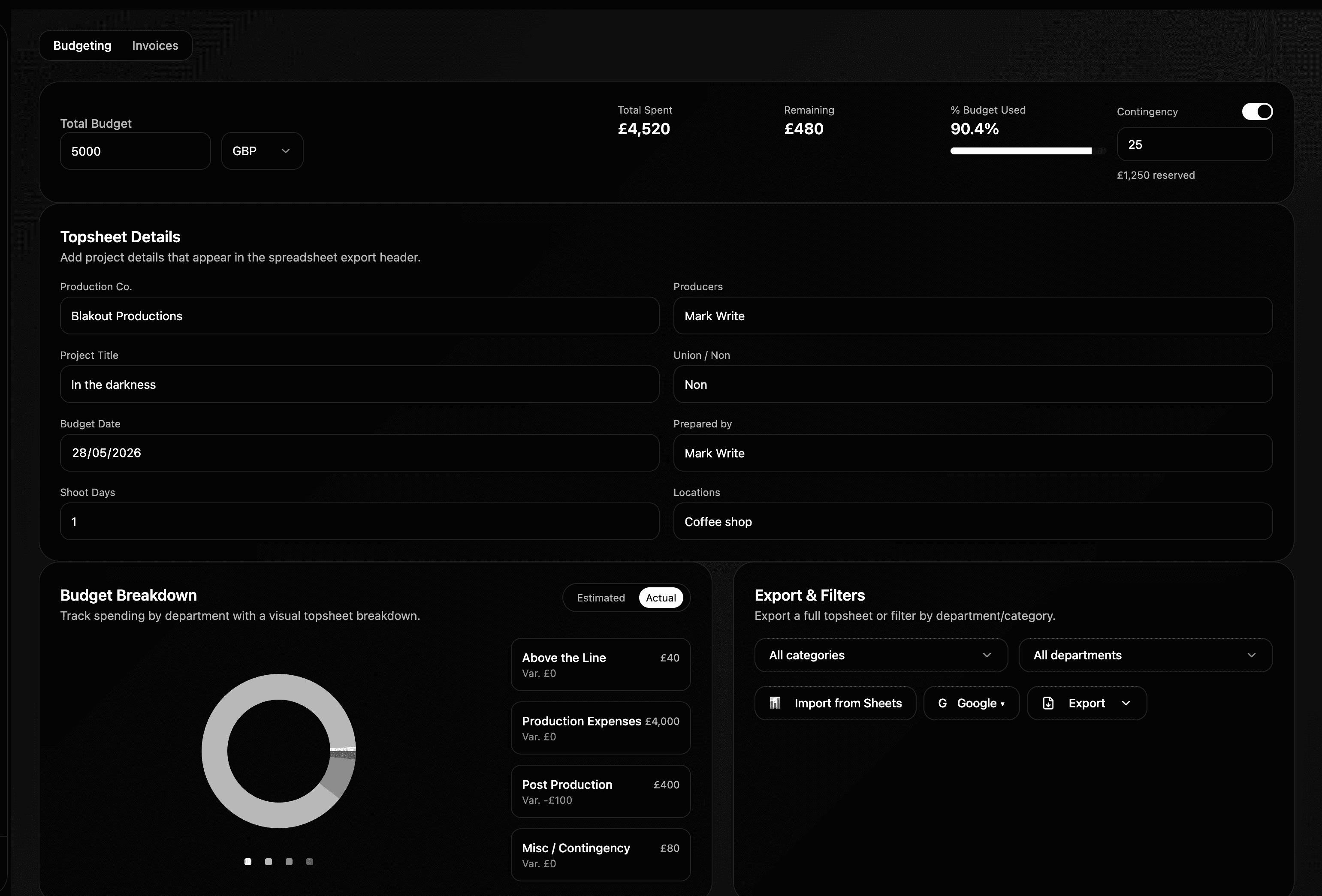
Budgeting a short film is one of the things filmmakers avoid the longest and regret the most. Here's a clear, practical breakdown of how to actually do it.
Most filmmakers avoid budgeting for as long as possible. It's not the creative part, it's not the fun part, and it has a habit of delivering uncomfortable news about how much things actually cost. But a budget isn't there to limit your film. It's there to make sure your film actually gets made.
A short film budget, no matter how small, needs to account for the same broad categories as a feature. The numbers are different but the structure is the same.
Equipment. Camera, lenses, lighting, audio. Are you hiring, borrowing, or using your own? If you're hiring, day rates add up fast. Factor in insurance if required.
Locations. Many short films are shot on free locations, favours, or owned spaces. But if you need a specific location, permits and location fees are real costs. Factor in any dressing or clearance work too.
Cast. Are you paying your actors? Even low or no budget productions should consider at minimum covering travel and expenses. If you're working with professional actors through an agency, rates apply.
Crew. Same question. Favours go a long way on short films, but be honest about who you can reasonably ask to work for free and who you should pay.
Production design. Props, wardrobe, set dressing. Often the most underestimated line in a short film budget.
Catering. Feed your crew. Always. It's not optional. Budget for breakfast and lunch at minimum on any full shoot day.
Post-production. Editing, colour grading, sound design, music licensing. If you're not doing all of this yourself, it costs money. If you are doing it yourself, it costs time, which also has a value.
Contingency. Add ten to fifteen percent on top of your total budget for things going wrong. Because things go wrong.
The budget conversation nobody wants to have before production is the conversation everyone has to have during it. Better to have it early, on paper, where it's still fixable.
Jonathan Germanos
Founder, Shotly
A few principles that make budgeting less painful.
Build your budget from your breakdown, not from a guess. Go scene by scene, list every requirement, then cost it. Guessing at a total figure and working backwards is how you end up short.
Be honest about what things cost. Filmmakers have a habit of optimistic budgeting, assuming equipment hire will be cheaper than it is, that locations will come through for free, that favours will materialise. Build in the real number and work down from there.
Track actuals against your budget throughout pre-production. The budget is a living document, not something you write once and file. Every time a cost changes, update it.
And don't treat contingency as available money. It's insurance. Leave it alone unless you actually need it.
Shotly has native budgeting built in, so your costs sit in the same platform as your script, your schedule, your shot list, and your call sheets. Nothing lives in a separate spreadsheet. Start free at shotly.io.

